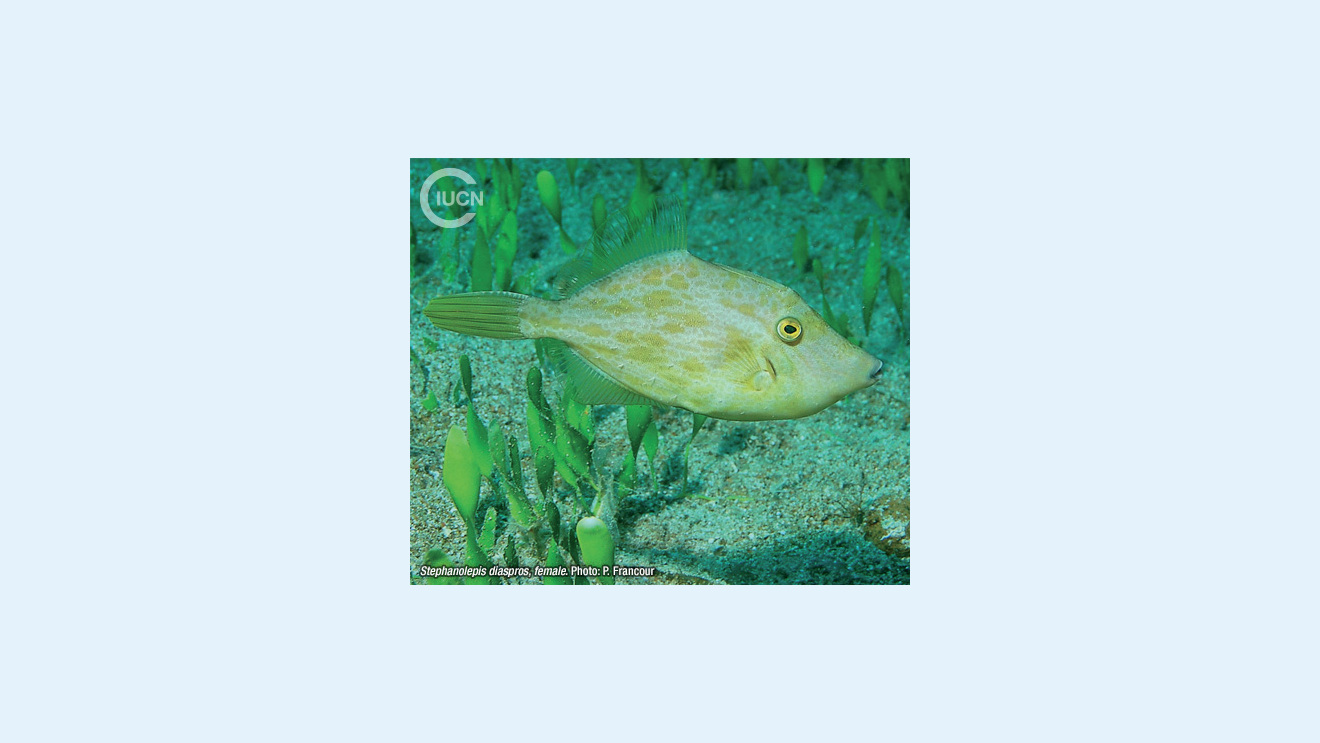
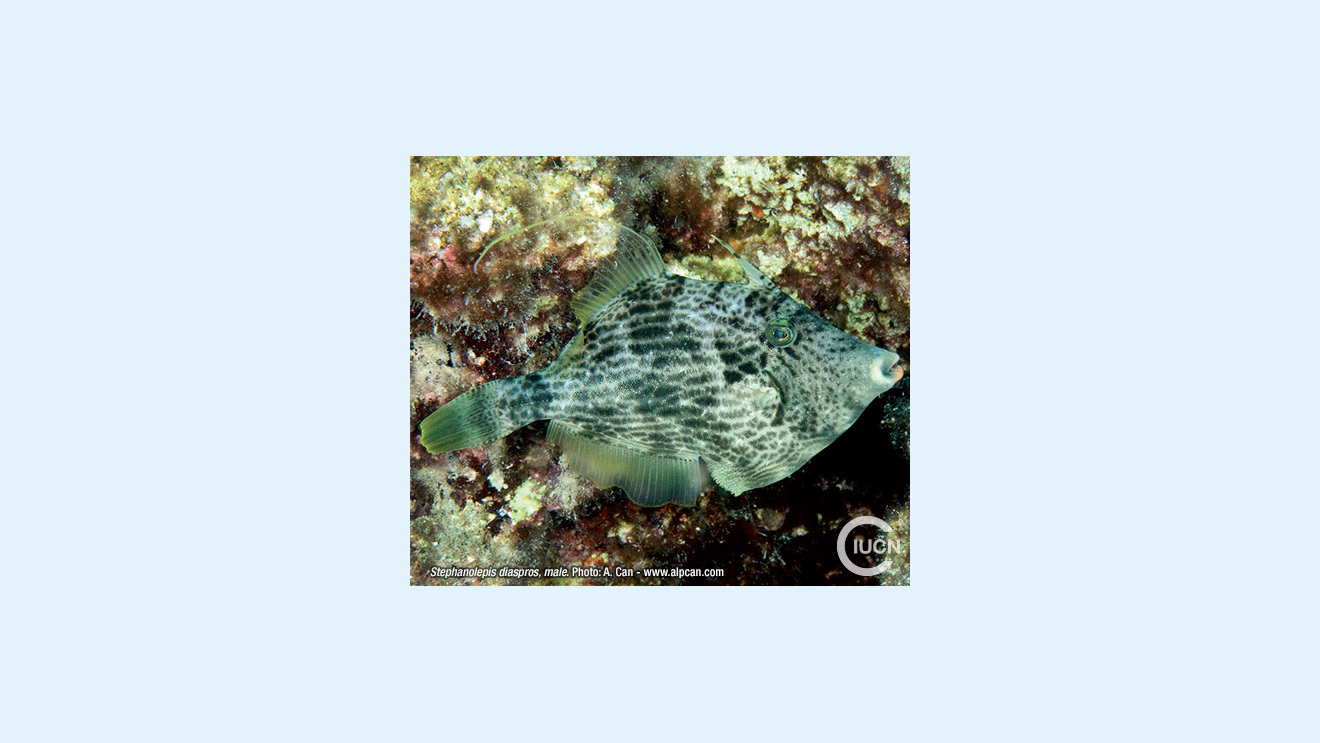
Stephanolepis diaspros
Πληροφορίες
The reticulated leatherjacket lives in small groups in coastal rocky habitats usually covered with vegetation, such as algal forests or seagrass meadows. It has been also recorded in a coastal lagoon in Tunisia (Bizerte lagoon). Young individuals also feed in open waters on sandy and muddy substrates.
In Tunisia, spawning season last from July to December.
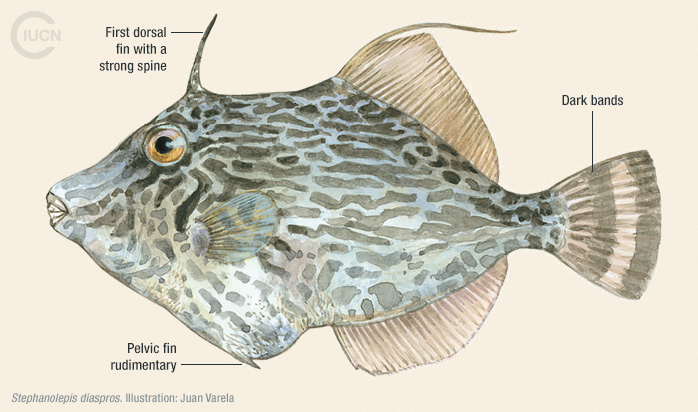
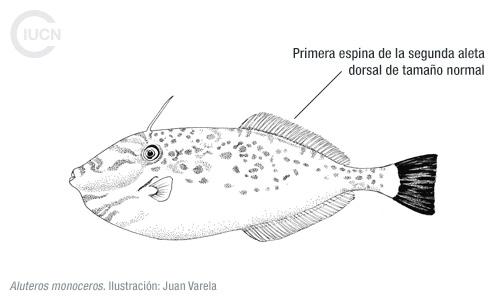
The Monacanthidae is a fish family typical of tropical seas. The only closely related Atlantic species occurring in the Mediterranean is the unicorn leatherjacket filefish Aluterus monoceros, recorded from the Zembra and Zembretta MPA, in Tunisia, and the Chafarinas Islands in the Alboran Sea. S. diaspros can be distinguished from A. monoceros by the first ray in the second dorsal fin, which is often long and filamentous; its much longer body; and the rough shagreen-like skin composed of very small scales with delicate spinules.
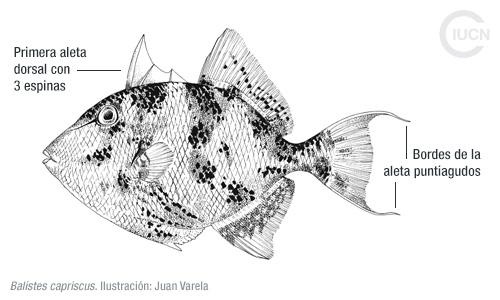
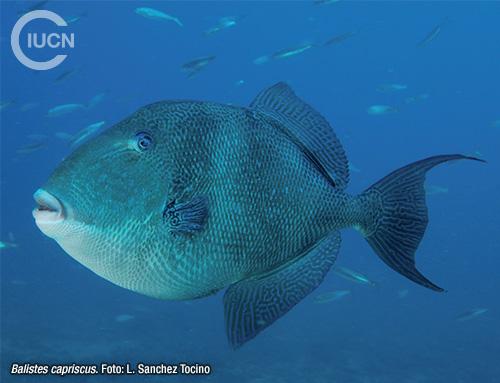
The native species Balistes capriscus differs from S. diaspros in having a first dorsal fin with three dorsal spines.
This is a western Indian Ocean species, recorded from the Persian Gulf to the Red Sea. In the Mediterranean it was first recorded in Palestine in 1927 and subsequently from Syria, Cyprus, Rhodes, Gulf of Gabes (Tunisia), Gulf of Taranto (Italy), Crete, Saronikos Gulf (Greece), Gulf of Palermo (Sicily) and the southern Adriatic. It is now very common throughout the eastern basin.
Stephanolepis diaspros feeds on a large variety of benthic invertebrates, and sometimes on algae and plants.
Both the non-indigenous monocanthid species, A. monoceros and S. diaspros, and the native one, B. capriscus, live in similar habitats and feed on similar prey items, with probable overlaps. They are therefore likely to compete for food and have an impact on local faunal diversity.
Due to its size, S. diaspros is not an important commercial species in the eastern Mediterranean basin. In some places, it is even seen as a nuisance to fisheries and all caught specimens are discarded.
Zouari-Ktari Rim & Bradai Mohamed-Nejmeddine, 2011. Reproductive biology of the lessepsian reticulated leatherjacket Stephanolepis diaspros (Fraser - Brünner, 1940) in the Gulf of Gabes (Eastern Mediterranean Sea). Reviews in Fish Biology and Fisheries 21: 641-648.