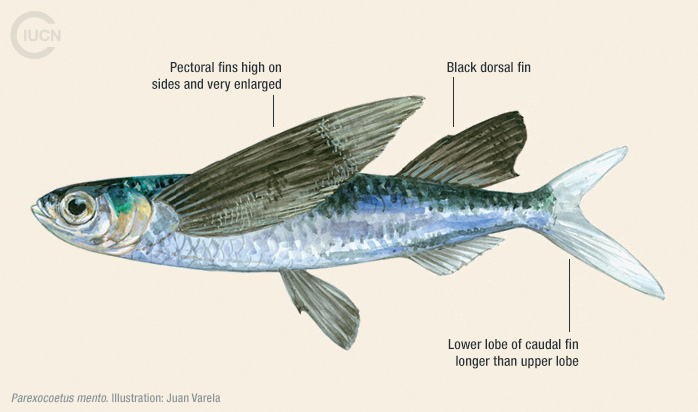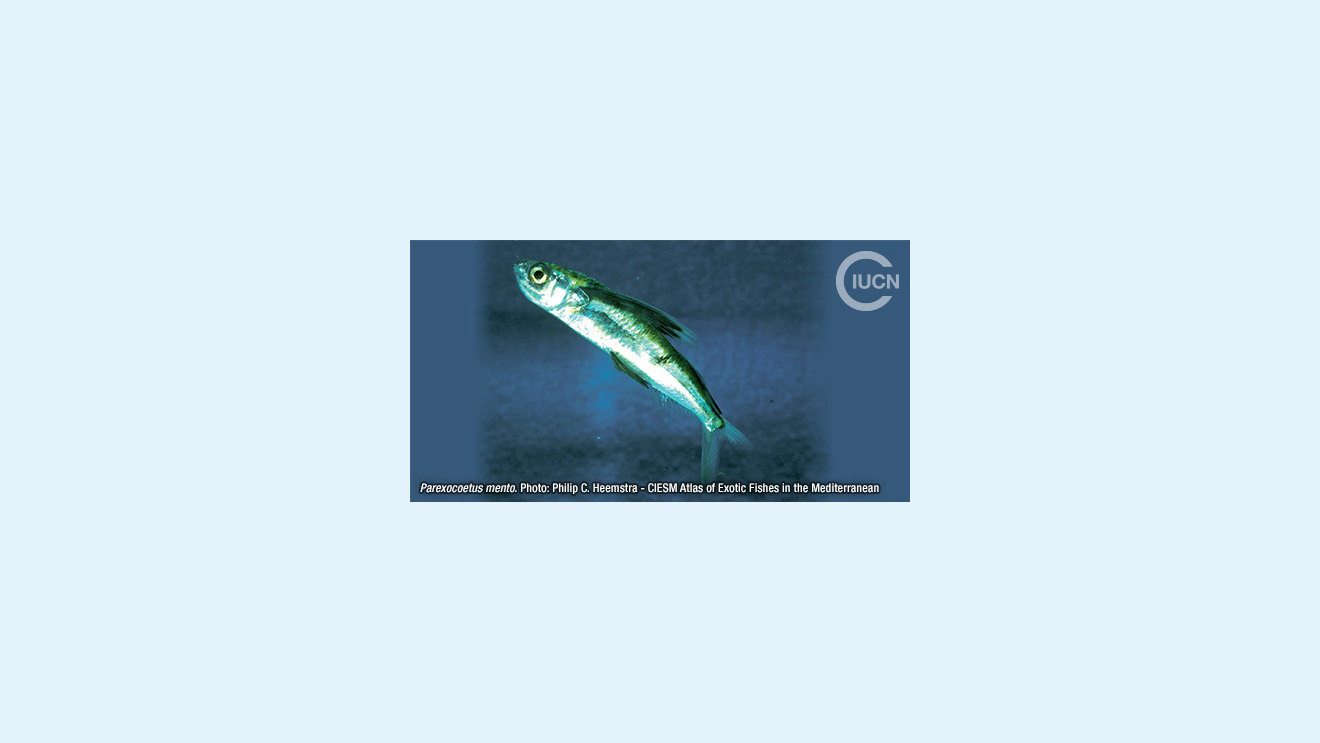
Parexocoetus mento
Information
It is mainly found in large schools in near-shore waters and never spreads to the open sea. When the African sailfin flyingfish is threatened, it can leap out of the water and glide over the surface.
Flyingfish eggs are negatively buoyant and typically have long sticky filaments that serve to attach them to floating objects.
There are several other Exocoetidae species in the Mediterranean. In all of them the pectoral fins reach back beyond the anal fin base; in P. mento, however, the pectoral fin is long but does not reach beyond the anal fin base.
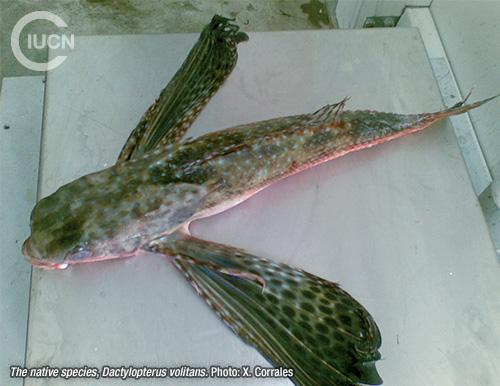
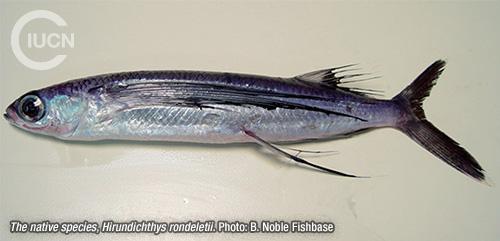
This species originates from the Indo-Pacific region; it is widespread from East Africa, including the Red Sea, to Australia. It migrated through the Suez Canal to the Mediterranean, where it was first recorded from Palestine in 1935, and it has subsequently been recorded in the Aegean Sea and eastern Mediterranean in the coastal waters off Syria, Egypt, Libya, Albania, and Tunisia.
It feeds on zooplankton and also on small fishes. Its impacts are unknown.
This species is caught occasionally in purse seines but its relatively small size means that it is of little commercial importance. As its main food is pelagic invertebrates and fish larvae, it could have a major impact on other commercial species.
http://www.ciesm.org/atlas/Parexocoetusmento.php
Bariche, M., 2012. Field identification guide to the living marine resources of the Eastern and Southern Mediterranean. FAO Species Identification Guide for Fishery Purposes. Rome, FAO. page 348