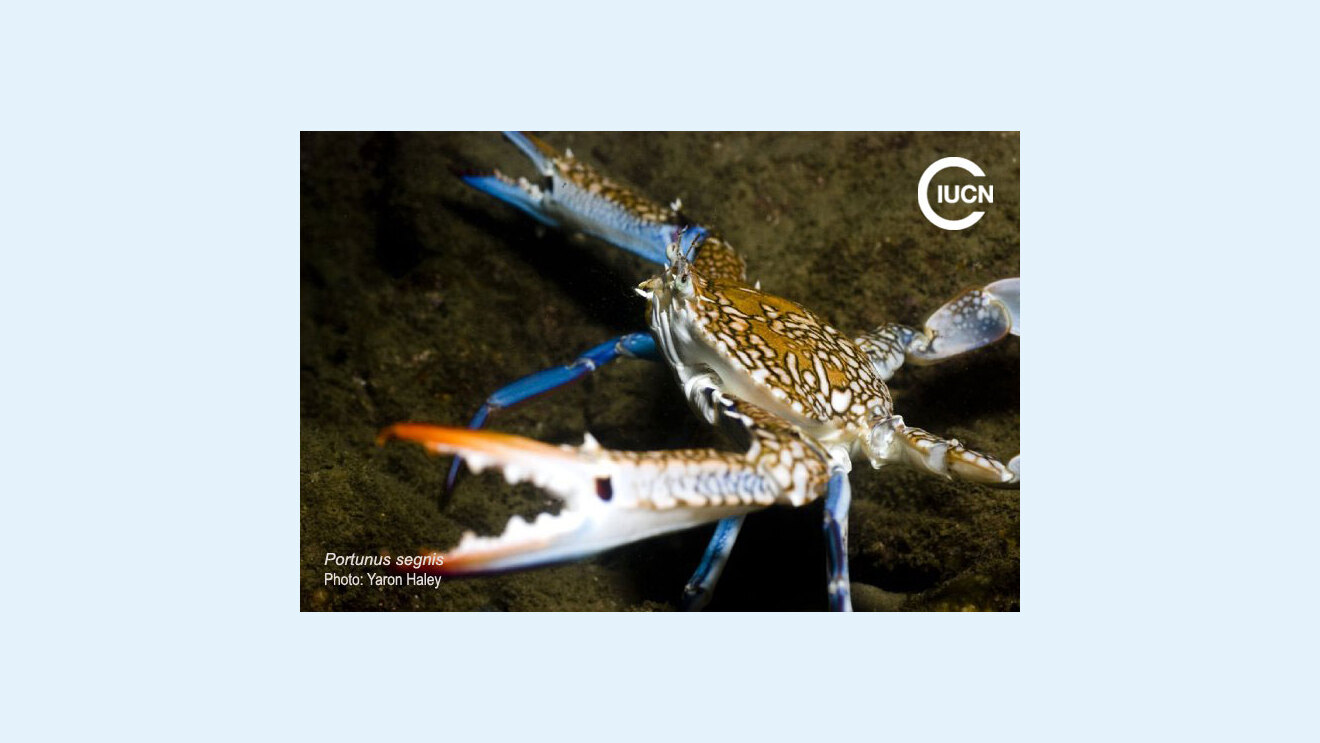
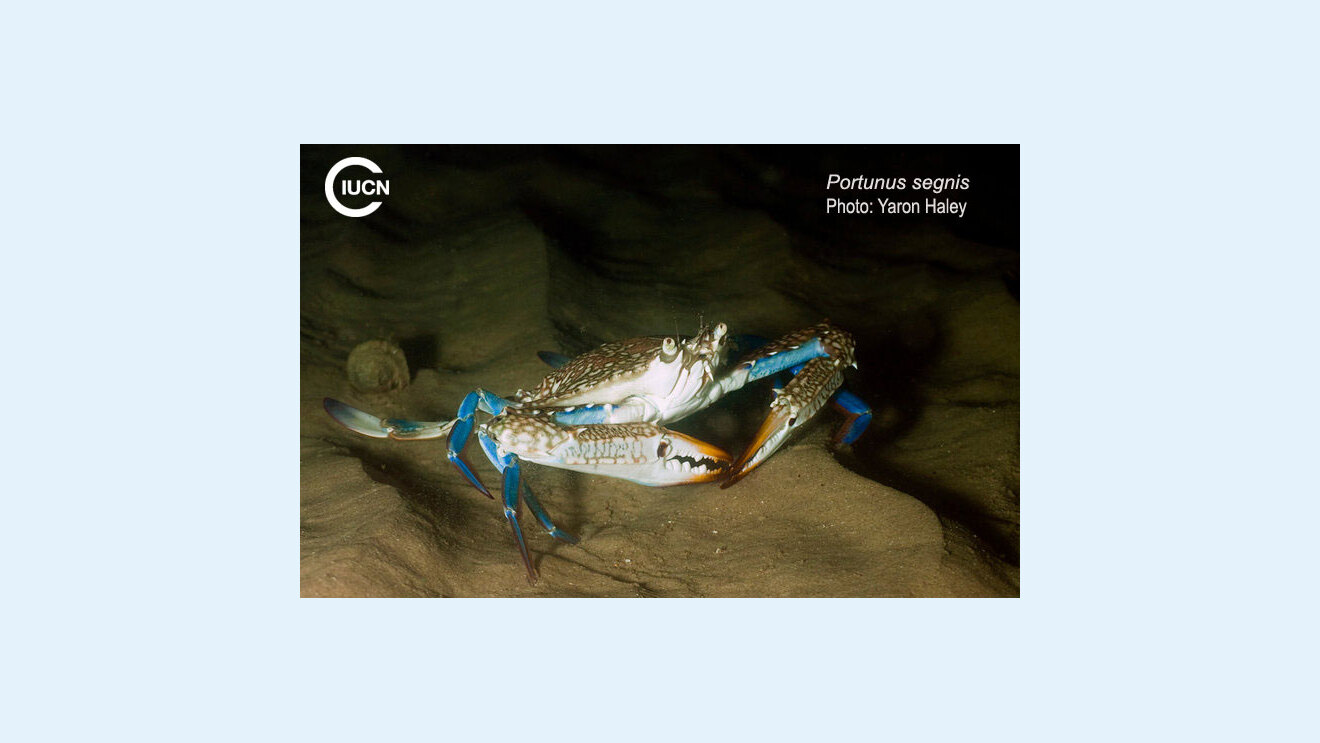
Portunus segnis
Information
Portunus segnis is a marine nocturnal crab. It occurs in sandy and sandy-muddy areas up to 50 m depth including near-rocks areas, seagrass and algal beds. Juveniles are commonly encountered in intertidal areas while females have been also found more abundant in shallow areas. It sometimes can be found buried in the sediment.
It can spawn all year round with a spawning peak in mid-winter to early of spring season. When this occurs, females seem to migrate to the shallow coastal areas just for spawning. It has long lived planktonic larval stages.
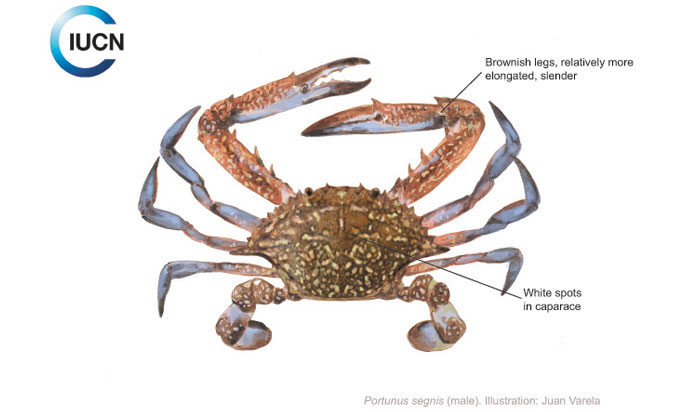
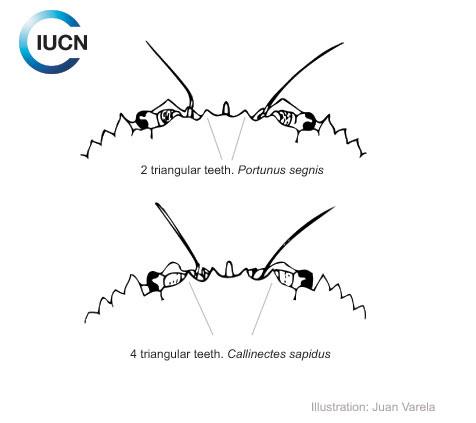
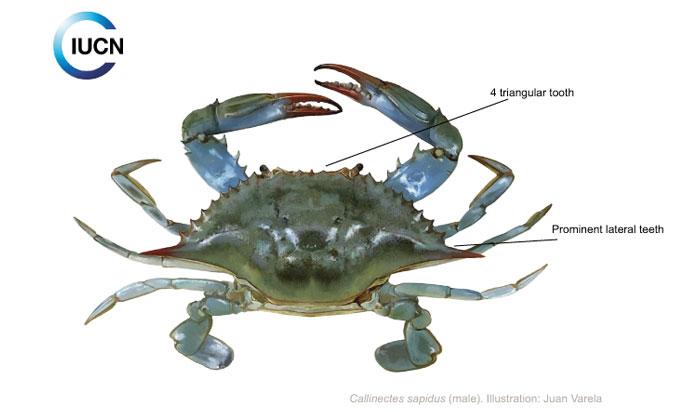
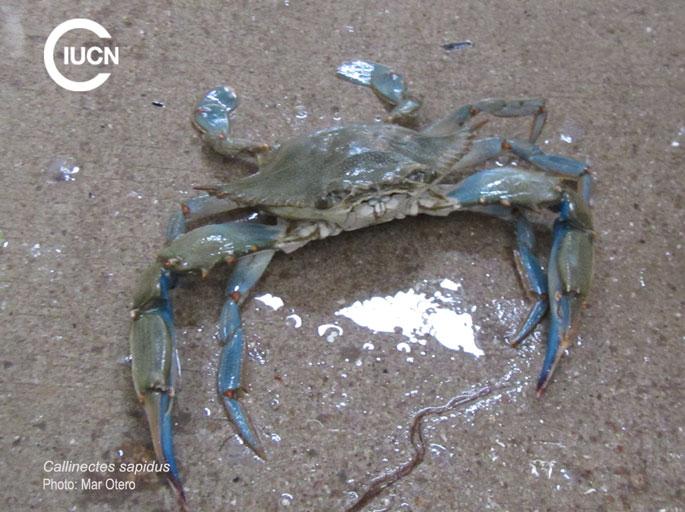
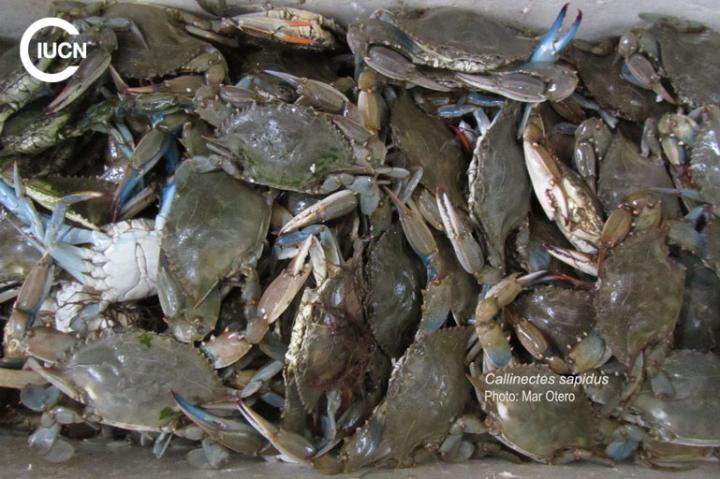
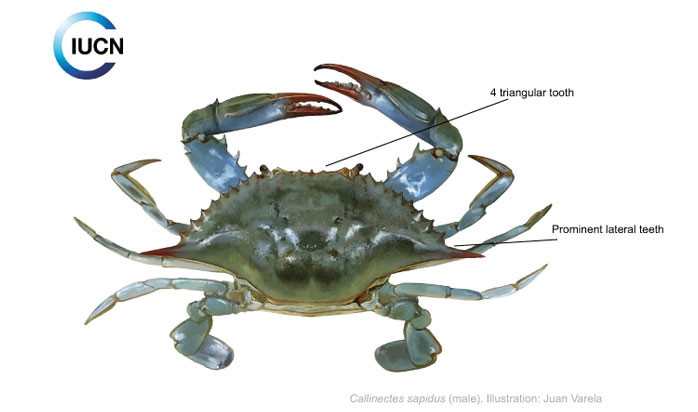
This species is similar to the Atlantic blue crab, Callinectes sapidus, another exotic species in the Mediterranean. Portunus segnis is, however, easily distinguished because it has 2 teeth (between the eyes) and a carapace rough with white spots. Callinectes sapidus has a more prominent lateral tooth, sharp-pointed, more intense blue colour in the legs and claws and 4 triangular frontal teeth.
The blue swimming crab, Portunus segnis was previously named as P. pelagicus. After its first record in Egypt (1924), this blue swimming crab was gradually recorded in various areas in the Mediterranean passing from the Levantine basin to the east Aegean, eastern Sicily and then in northern Tyrrhenian (Galil et al., 2002). It is known from Cyprus, Egypt, Syria, Palestine, Israel, Turkey, Tunisia, Lebanon, Italy, Greece and Albania. The species is originally from the western Indian Ocean, Persian Gulf, Red Sea and East coast of Africa and enter into the Mediterranean most probably through the Suez Canal.
The impact of P. segnis on the Mediterranean benthic fauna is not well known. Blue swimming crabs are carnivorous, scavengers and voracious predators and might compete with local fauna.
In the Mediterranean, blue swimming crabs represents a valuable component of small-scale coastal fisheries in the Levante and Greece.
http://www.europe-aliens.org/pdf/Portunus_pelagicus.pdf
Rabaoui et al., 2015. Occurrence of the lessepsian species Portunus segnis (Crustacea: Decapoda) in the Gulf of Gabes (Tunisia): first record and new information on its biology and ecology. Cah. Biol. Mar. 56 : 169-175