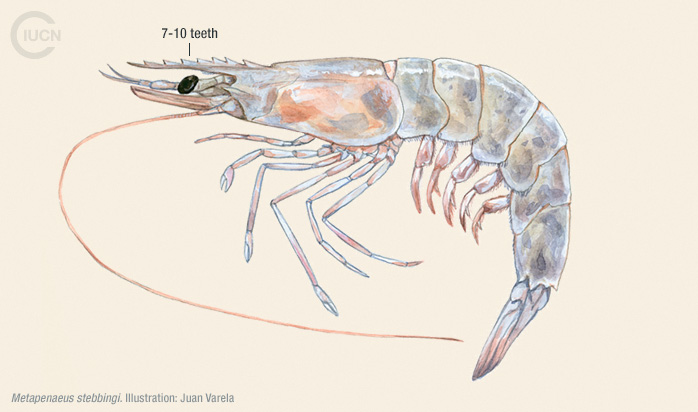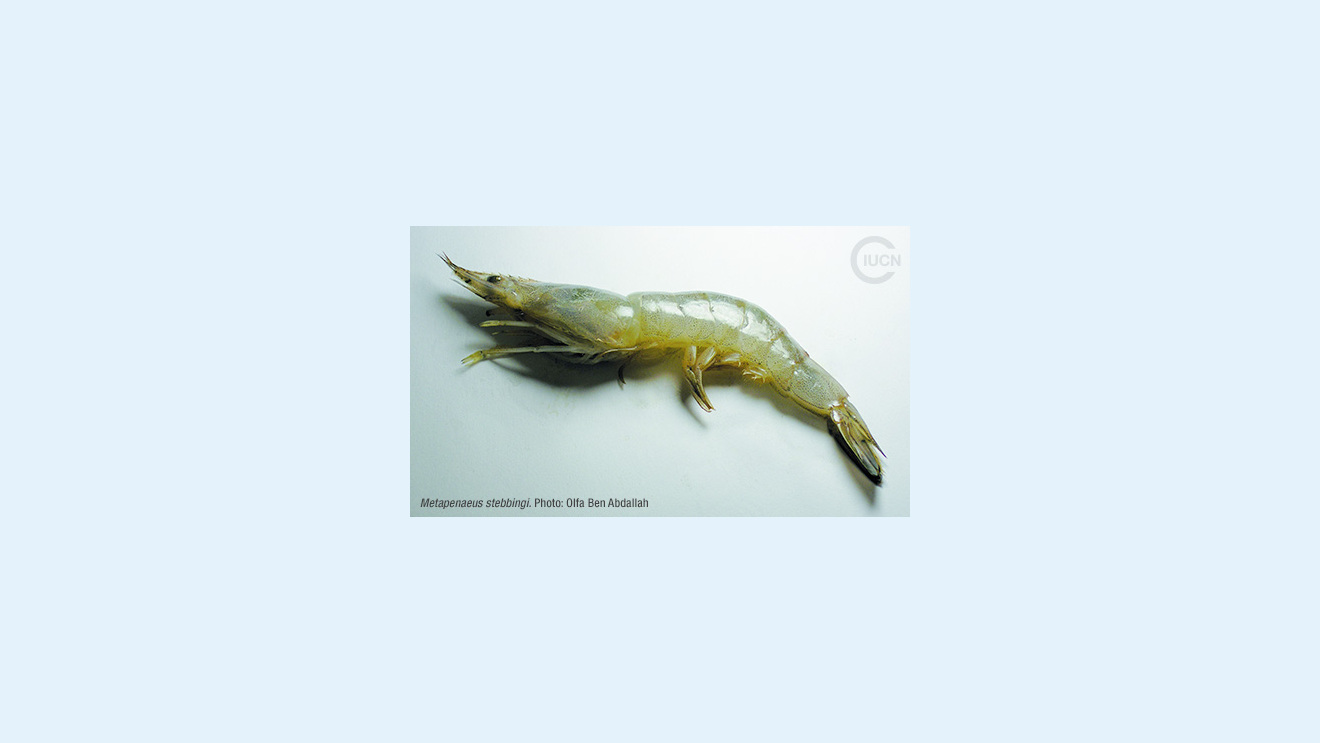
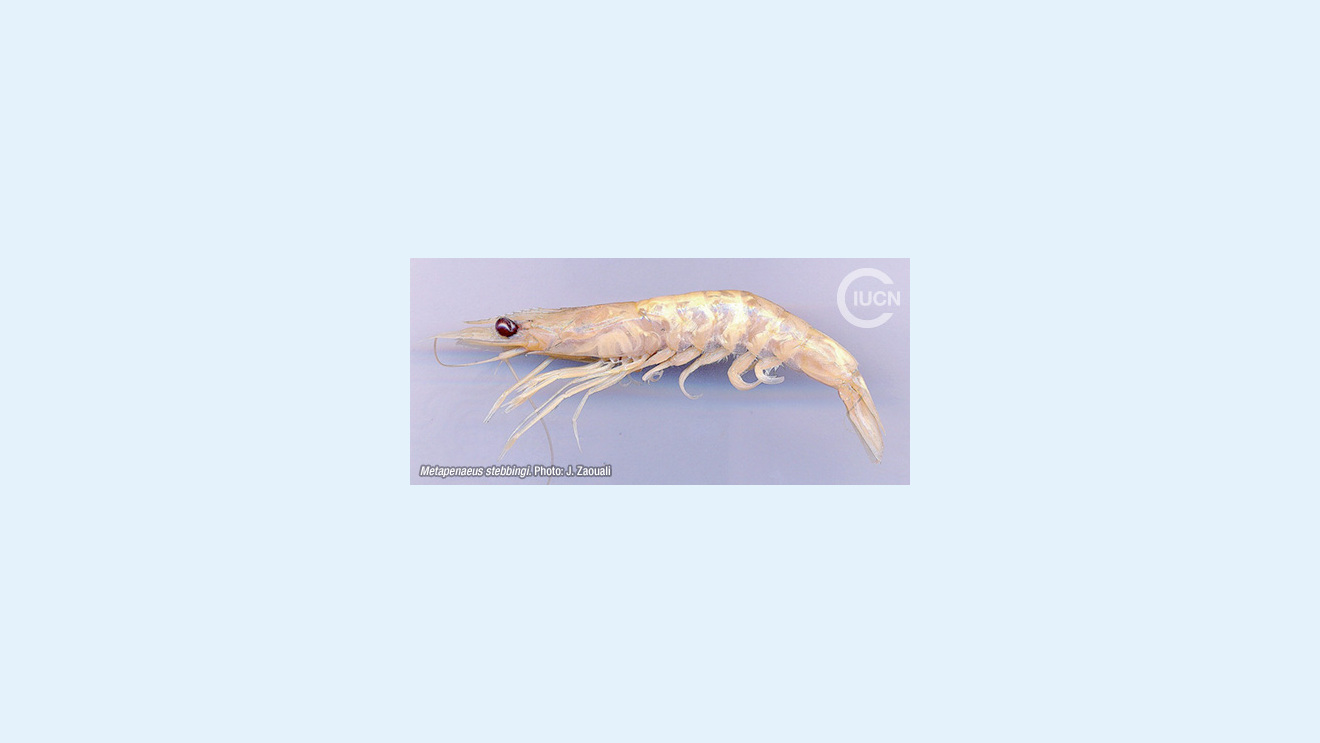
Metapenaeus stebbingi
Πληροφορίες
This species inhabits sandy or sandy-mud bottoms down to 90 m in depth. Juveniles occur in shallow coastal waters and adults usually further offshore, buried in the substrate in daytime and foraging at night.
Females attain sexual maturity at a relatively small size (5.5–6.0 cm in length). The highest percentage of mature females occurs between May and June, but the breeding season generally lasts from April to October.
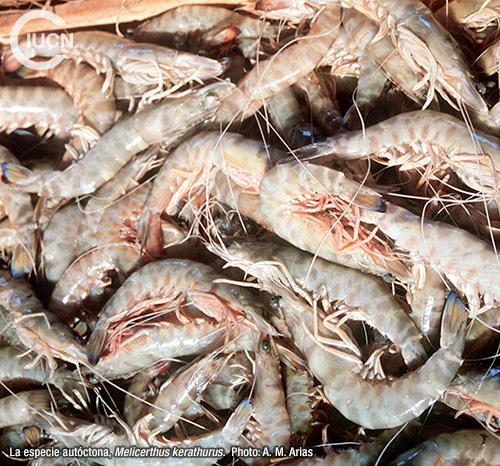
The native Mediterranean Melicertus kerathurus can be distinguished from Metapenaeus stebbingi by the transverse dark bands on the first four segments of the abdomen and by the spines on its first and second pairs of walking legs.
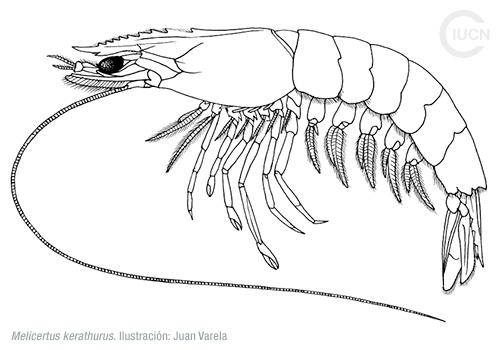
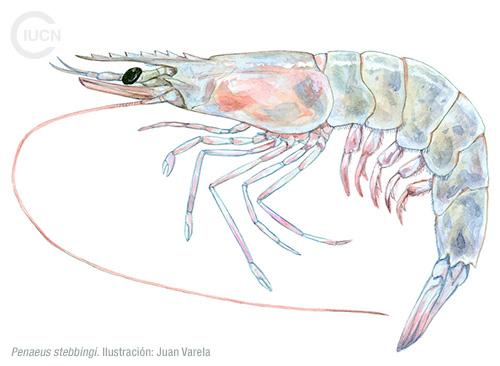
Native to the Indo-West Pacific, the peregrine shrimp was first recorded in the Mediterranean in Egypt in 1924. It has subsequently been recorded in Israel, Lebanon, southern Turkey, Syria and Tunisia.
Currently the impacts of this invasive shrimp on the native fauna in areas where it has been introduced are uncertain. The peregrine shrimp may have an advantage over the native Mediterranean prawn Melicertus kerathurus in competing for food resources, thereby affecting populations of this native species.
The peregrine shrimp is nowadays a commercially important species for fisheries in the Levant Sea. It is also a farmed species in ponds along the coast of Turkey.
Hamida-Ben Abdallah, O. et al., 2006. Premiere observation de la crevette faucon Metapenaeus stebbingi (nobili, 1904) dans le Golfe de gabes. Bull. Inst. Natn. Scien. Tech. Mer de Salammbô, Vol. 33, 133-136.
Bariche, M. 2012. Field identification guide to the living marine resources of the Eastern and Southern Mediterranean. FAO Species Identification Guide for Fishery Purposes. Rome, FAO. 610 pp.