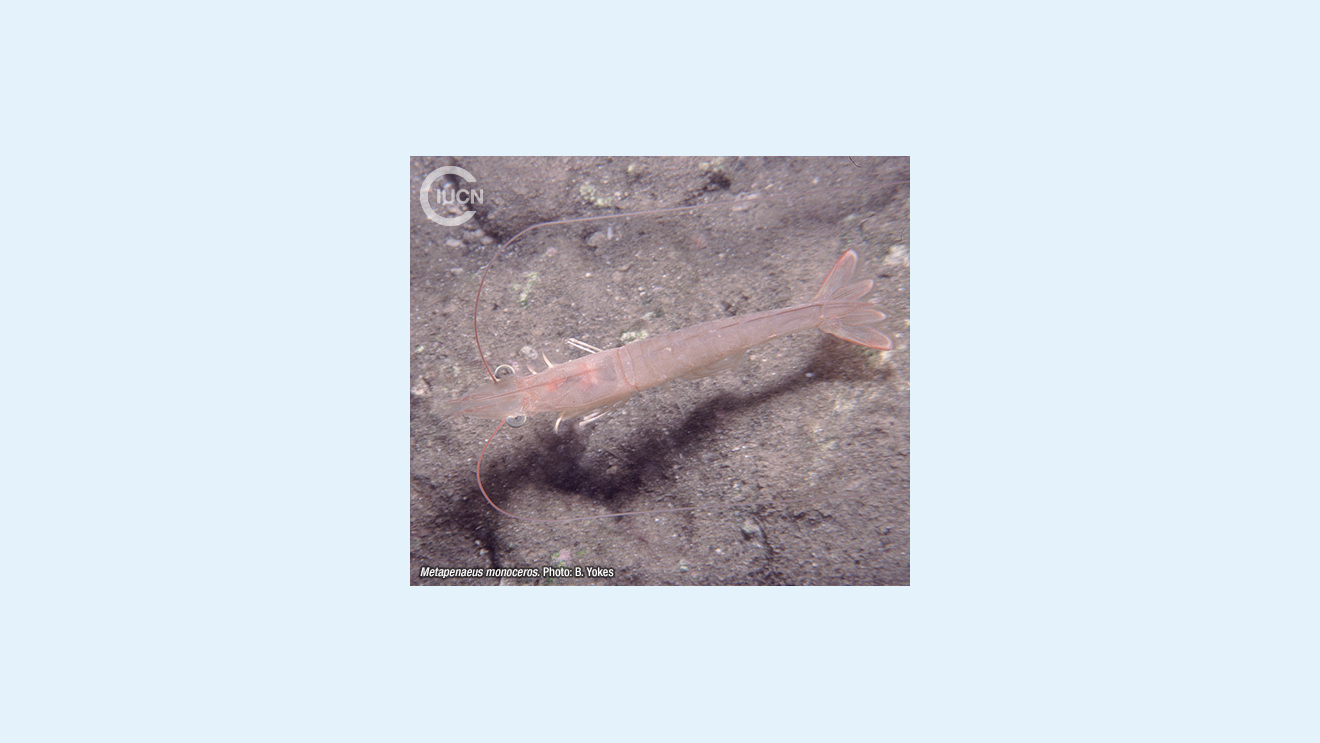
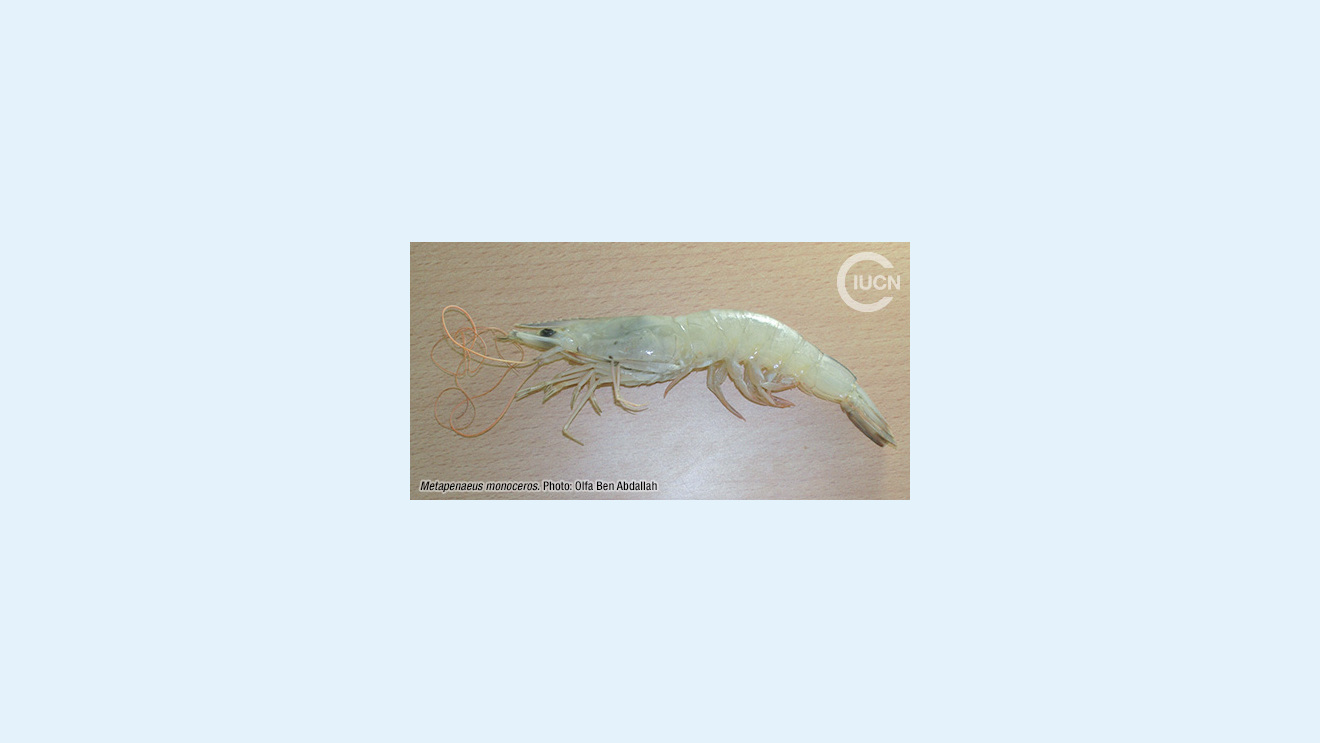
Metapenaeus monoceros
Information
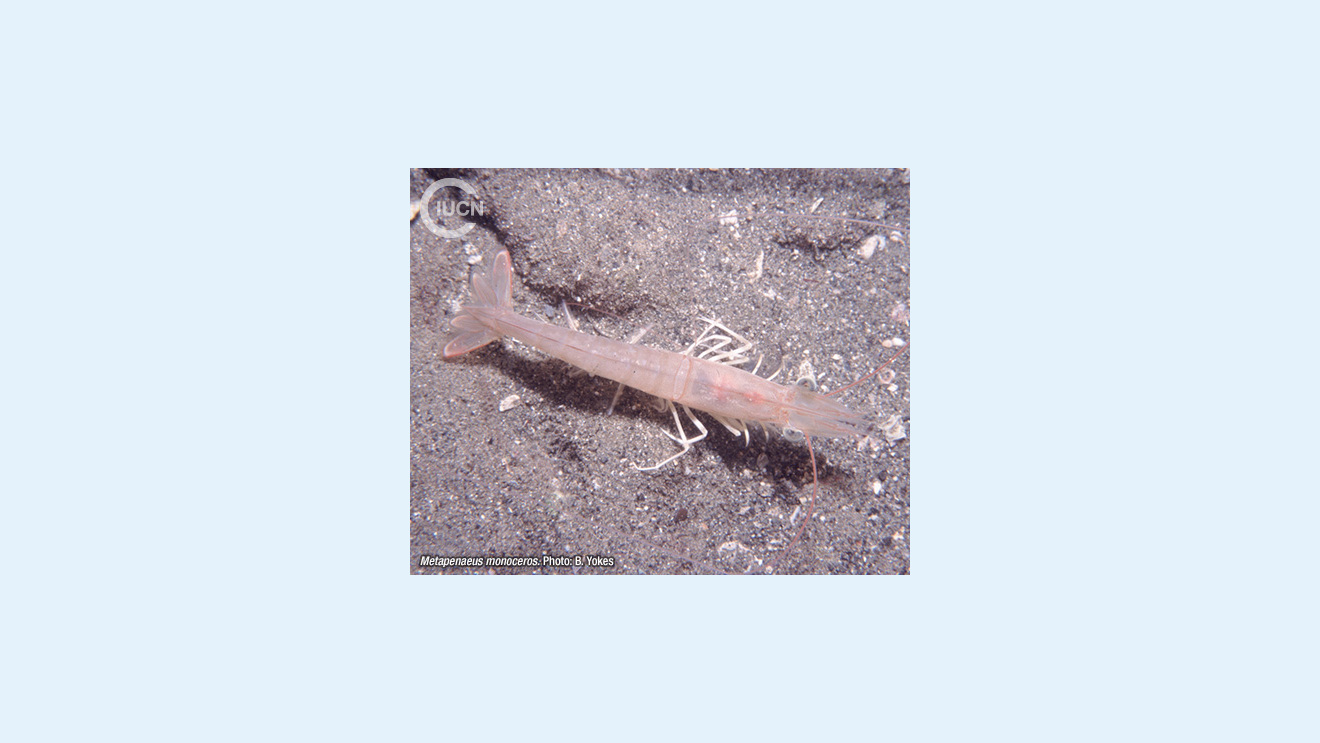
The speckled shrimp is found to a depth of 170 m, commonly 10–30 m, on sandy or sandy-mud bottoms.
Spawning occurs twice a year, with the first peak in May–June and the second in October–November in Tunisia, and in May and July–October in Egypt. In Tunisia, the size for males to reach sexual maturity is 7.6 cm and for females 12.2 cm, although the smallest mature specimen found in Egyptian waters was 9.5 cm. The larvae can be transported over long distances, a possible means of new introductions.
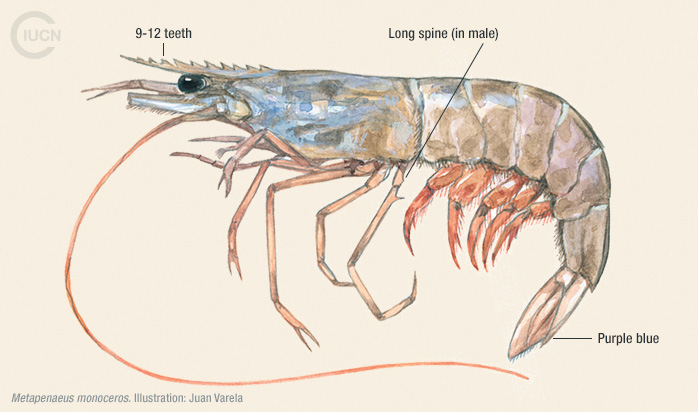
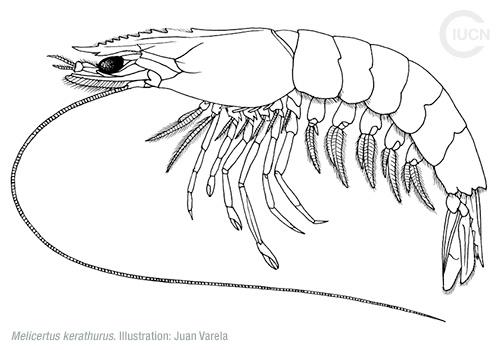
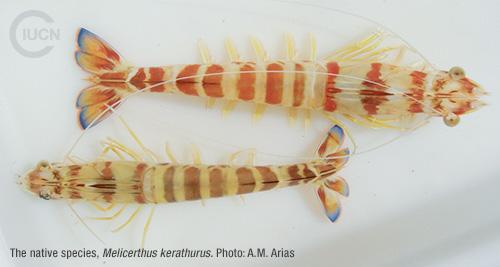
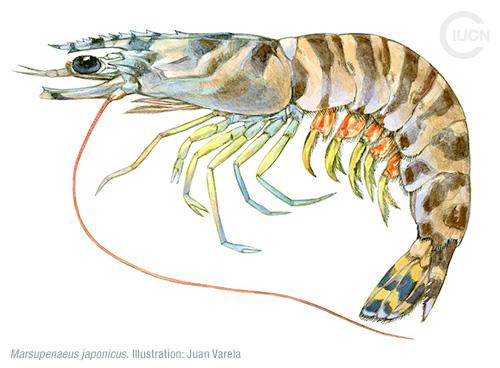
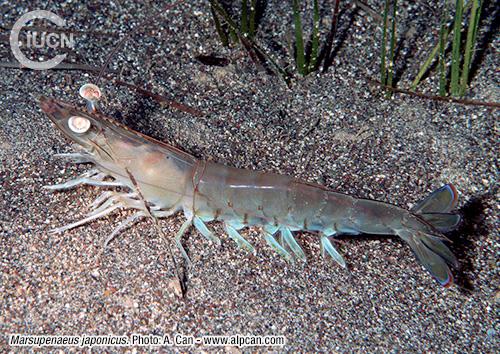
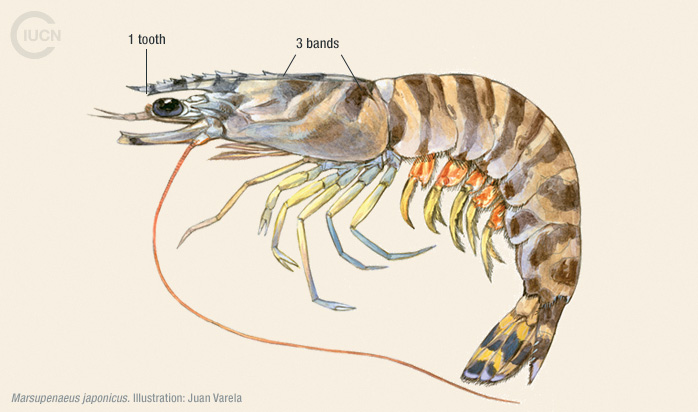
The Mediterranean shrimp Melicertus kerathurus lacks the curved spine on the fifth walking leg in males and its carapace is hairless. The kuruma shrimp, Marsupenaeus japonicus, differs from the speckled shrimp in its prominent colour pattern, with transverse dark bands on the first four segments of the abdomen.
Native to the Indo-West Pacific, the speckled shrimp was first recorded in the Mediterranean (as Penaeopsis monoceros) in Egypt in 1924, and has subsequently been found in Israel, southern Turkey, Cyprus, Lebanon, Syria, Tunisia and Italy.
It may pose a threat to the native penaeid shrimp Melicertus kerathurus as it outcompetes native species for food and territory.
It is commercially important in Egypt, Israel, Lebanon, Turkey and Tunisia, where is caught by trawlers in offshore and beach seines.
Streftaris, N. et al., 2005. Globalisation in marine ecosystems: the story of non-indigenous marine species across European seas. Oceanogr. Mar. Biol. Ann. Rev. 43, 419-453.
Bariche, M., 2012. Field identification guide to the living marine resources of the Eastern and Southern Mediterranean. FAO Species Identification Guide for Fishery Purposes. Rome, FAO. 610 pp.
Ben Hadj Hamida-Ben Abdallah, O. et al., 2009. Reproductive biology of the speckled shrimp Metapenaeus monoceros (Fabricius, 1798) (Decapoda: Penaeidae) in the gulf of Gabes (Southern Tunisia, Eastern Mediterranean). Cahiers de Biologie Marine Vol. 50 No. 3 pp. 231-240.
Serpil Yilmaz, Z. Arzu B. Ozvarol and Y. Ozvarol, 2009. Fisheries and Shrimp Economy, Some Biological Properties of the Shrimp Metapenaeus monoceros (Fabricus, 1798) in the Gulf of Antalya (Turkey). Journal of Animal and Veterinary Advances, 8: 2530-2536.