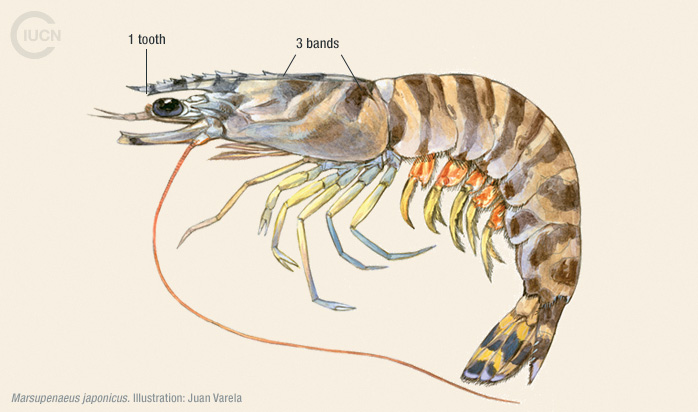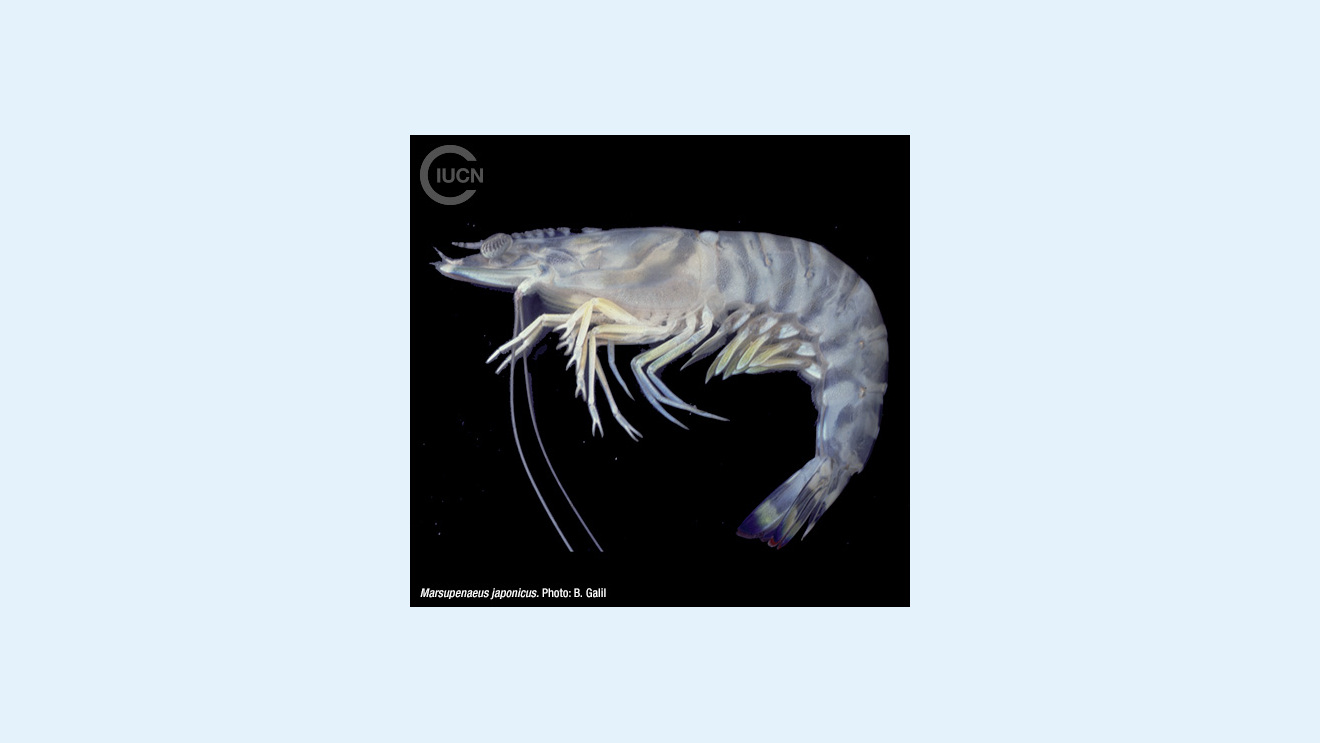
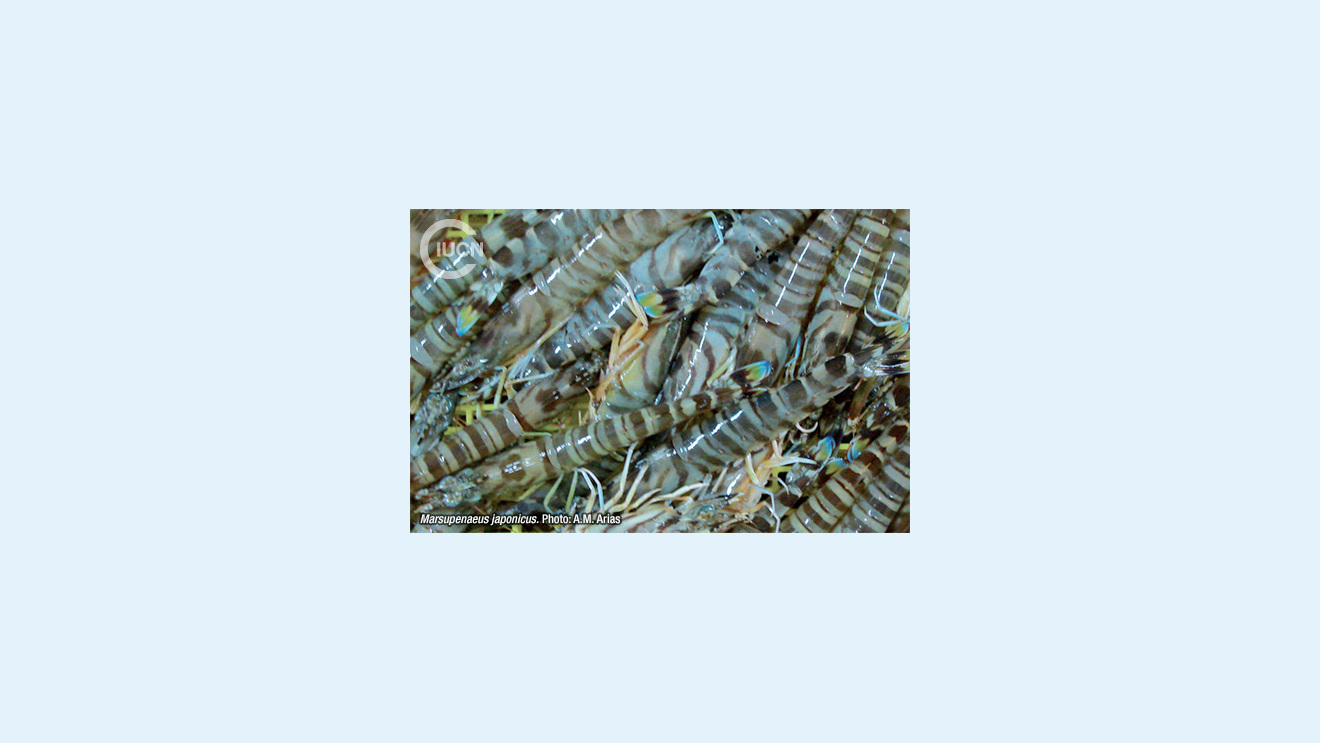
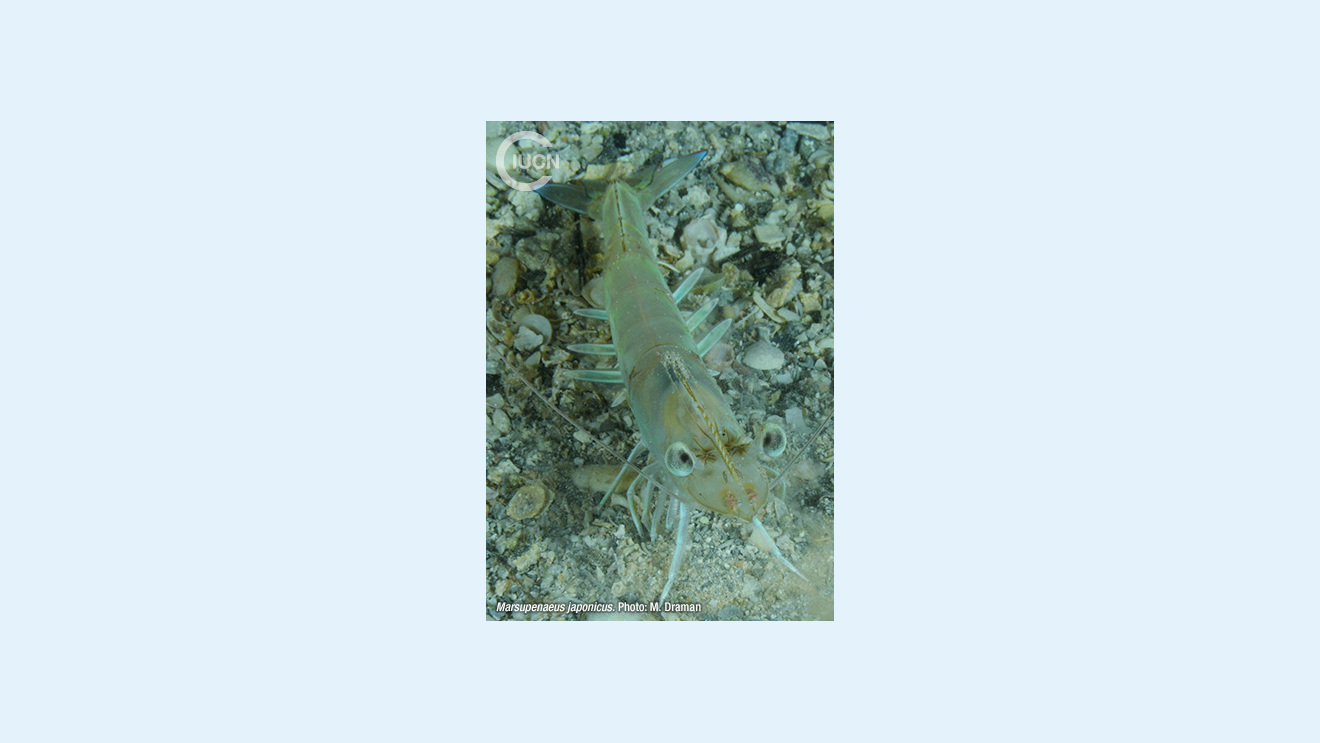
Marsupenaeus japonicus
Information
The Japanese tiger prawn inhabits mainly bays and inland seas, from the coastline to depths of about 90 m, but usually less than 50 m. It prefers sandy and sandy-mud bottoms, where it lies buried during the day and roams on the bottom at night.
The spawning season runs from April to November and begins when the seawater temperature exceeds 20 °C. Larvae require water temperatures above 24 °C for growth. The average life-span is approximately 2.5 years.
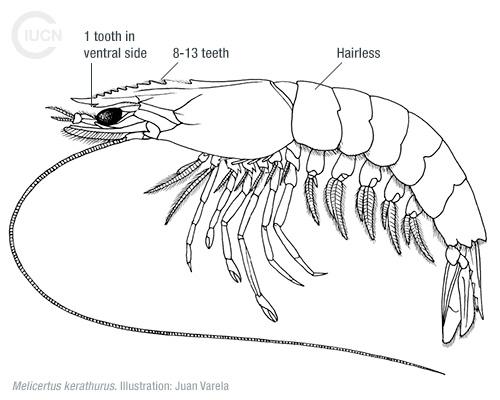
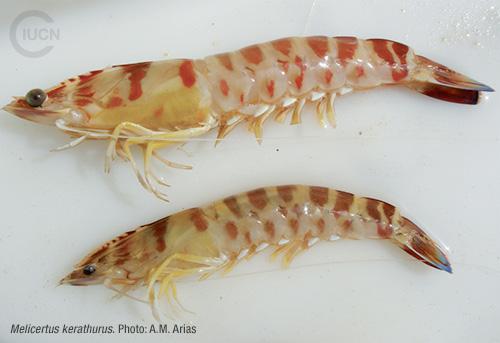
The first two pairs of walking legs of the native shrimp Melicertus kerathurus have spines and transverse dark bands on the first four segments of the abdomen.
Native to the Indian and western Pacific Oceans, this species’ first Mediterranean record was as Penaeus canaliculatus in Egypt in 1924. The species had migrated through the Suez Canal and has spread subsequently along the Levantine coast (Israel, Lebanon, Syria, Cyprus and southern Turkey) to the Greek island of Rhodes. Other records, from the Adriatic coast of Italy, France, the Amvrakikos and Vistonikos Gulfs (Greece), the Sea of Marmara, and the Mar Menor (Spain), are most probably due to escapes from aquaculture facilities.
This prawn competes with the native shrimp Melicertus kerathurus for resources. Farmed prawns can also create major problems for native shrimp species and wild fishes by transferring parasites and disease if escapes from aquaculture facilities occur.
Marsupenaeus japonicus is commercially important for fisheries in the Levant and in pond aquaculture around the Aegean Sea and in the central and western Mediterranean. It has almost supplanted the previously commercially important native penaeid prawn Melicertus kerathurus from the easternmost part of the Mediterranean.
http://www.europe-aliens.org/pdf/Marsupenaeus_japonicus.pdf
Bariche, M. 2012. Field identification guide to the living marine resources of the Eastern and Southern Mediterranean. FAO Species Identification Guide for Fishery Purposes. Rome, FAO. 610 pp.